Ancient engineering in open countryside
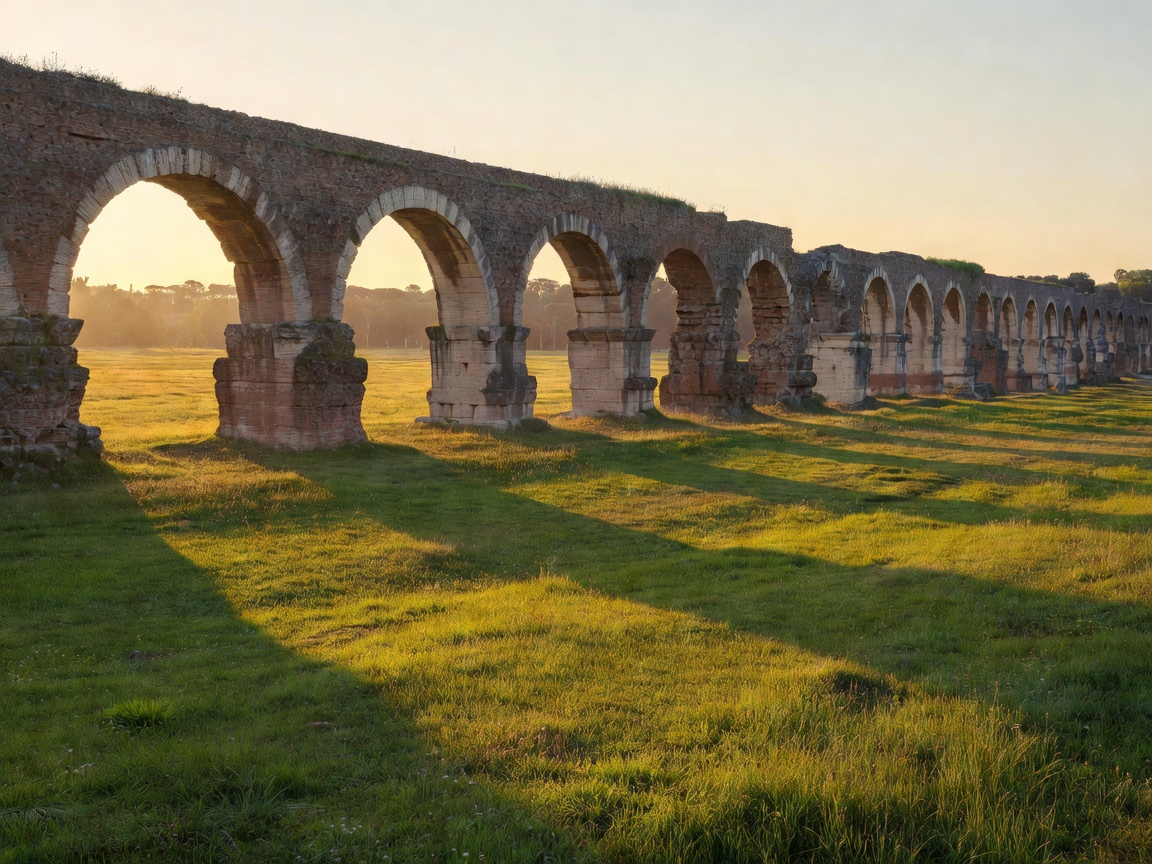
Parco degli Acquedotti lies in Rome's south-eastern suburbs and forms part of the Appia Antica Regional Park. Its landscape is simple and unforgettable: flat meadows, a few farm buildings and long lines of arches carrying — or once carrying — water towards the city. The most dramatic are the remains of the Aqua Claudia, an imperial aqueduct begun under Caligula and completed under Claudius in the first century AD, whose brick-faced arches rise high above the grass.
Running alongside are traces of the older Aqua Marcia, built in the Republican period, and the Acquedotto Felice, a Renaissance-era aqueduct commissioned by Pope Sixtus V in the late sixteenth century that reused parts of the ancient line. Seeing structures from such different eras side by side is one of the park's quiet pleasures. Film lovers may recognise the setting: the aqueducts appear in Federico Fellini's La Dolce Vita and in Paolo Sorrentino's The Great Beauty.
What to see and do
- The Aqua Claudia arches. Walk the main path parallel to the arches for the classic long perspective, especially striking in low morning or evening light.
- Casale di Roma Vecchia. A historic farm complex near the arches that gives a sense of the rural Campagna that surrounded Rome for centuries.
- Small canals and water channels. Water still runs in a channel through parts of the park, attracting birds and giving the meadow a surprisingly green edge.
- Running and cycling. Level, unpaved paths make this one of the city's favourite spaces for joggers and casual riders.
- Picnics. There are no formal picnic facilities, but locals spread blankets on the grass on weekend afternoons.
Costs and what's free
Entry to the park is free and there are no ticket gates. You will not find large museums here, and services are limited, so bring what you need. Some nearby sites within the wider Appia Antica area — such as the Villa dei Quintili — are managed separately and charge admission. If you plan to combine the aqueducts with the Via Appia Antica itself, factor in distance: the regional park is vast, and the historic road is a separate trip for most visitors.
Getting there
Take Metro Line A towards Anagnina and get off at Giulio Agricola or Subaugusta. From either station it is a short walk through residential streets to the park's edges. Journey time from central Rome is modest, making this an easy half-day trip. The terrain is flat but mostly unpaved; paths can be dusty in summer and muddy after rain, so sturdy shoes help.
Pros and cons
Pros
- Monumental Roman ruins with no entry fee
- Wide open space, rarely crowded on weekdays
- Superb for photography at golden hour
- Direct metro access from the centre
Cons
- Very little shade — punishing on summer afternoons
- Few toilets, cafés or water points inside the park
- Unlit after dark, with limited signage
- Not ideal for wheelchairs after wet weather
How it compares
| Park | Atmosphere | Facilities | Crowds | Main draw |
|---|---|---|---|---|
| Parco degli Acquedotti | Wild, pastoral | Minimal | Light on weekdays | Roman aqueduct arches |
| Villa Borghese | Elegant, cultivated | Good | Busy at weekends | Views, lake, free museums |
| Parco Sempione | Urban, lively | Good | Busy in fine weather | Castle and arch vistas |
Tips for a better visit
- Visit early in the morning or in the two hours before sunset, particularly from June to September.
- Carry water, sunscreen and a hat; shade is almost non-existent.
- Stay on paths and respect grazing areas and farm property.
- Leave before dusk — the park is unlit and exits are spread out.